Saturday, 3 December 2011

Hilma af Klint


The swedish artist Hilma af Klint, 1862- 1944,  belonged to a group called 'De Fem' (The Five) who strove towards self-knowledge and mystical thought through messages from future higher beings.

She was an active member of many spiritual associations and, after an involvement with Madame Blavatsky's Theosophical movement, became a member of Rudolph Steiner’s Anthroposophical Society.

After ten years of practice with De Fem, in 1906, af Klint was singled out to embark on a solo project to pursue occult knowledge which they described as ‘all the knowledge that is not of the senses, not of the intellect, not of the heart, but is the property that exclusively belongs to the deepest aspect of your being. the knowledge of your spirit’

Her experiments with automatic drawing, a method developed by the surrealists as a means of expressing the subconscious, lead her towards an inventive geometric visual language capable of conceptualising invisible forces both of the inner and outer worlds.

She continued adding to her prolific body of work, amounting to over 1000 pieces, until 1941. She requested that it should not be shown until 20 years after the end of her life.

Friday, 2 December 2011

Eduardo Paolozzi!!

I must confess Eduardo Paolozzi was my first love, so much so that I stole a book of his from my school's library, even though it was in French. Who would have thought he was Scottish hey!

Vernor panton


I always forget Vernon Panton... but never again!!!
Sounds more like an estate agents but oh so much better!

Weaving at the Bauhaus!

Gunta Stölzl born 1897.

Following her studies at Kunstgewerbeschule (School of Arts and Crafts) in Munich between 1913-16, and then serving in WW1 as a voluntary red cross nurse.

Stölzl continues her studies at the Bauhaus Weimar in autumn 1919. in 1923 she establishes dyeing facilities in the Weaving Workshop at the Bauhaus. By 1925 she was appointed craft master of the Weaving Workshop at the Bauhaus in Dessau.
 
Her first large knotted carpet is sold at the first Bauhaus exhibition in 1923. The new owner has a room especially built for the carpet, “some place in France”. The whereabouts of the carpet are unkown.


Bauhaus Fest  
29.11.1924

 Gunta Stölzl seated in the middle.

Utopian Dreams

Dymaxion House, 1929 (above) by Buckminister Fuller, an architectural visionary who's geodesic designs offered practical solutions for an efficient and sustainable future. 
The staggering array of designs and inventions - many of which were to be realised, were far ahead of their time in terms of ecological awareness, for example integrating inspired features such as water recycling systems.


Anon.
One of Archigram studio most famous visions from the 1960s is for a city that perambulates across the countryside ... they meant for their cities of the future to be monstrous walking machines, strolling from one part of the world to the other.
Sliding pavements - and the Depth-scraper! 1931

Modern Eichler home designs


House plans designed by the architece Joseph Eichler
The houses were designed during the 1960's for two Bay Area developments – one in Mill Valley and one in the Oakland Hills – and include classic modern features like atriums and galleries. They’re all about casual indoor-outdoor living.

Sunday, 30 October 2011

housing.


Prefabricated housing in tubes by Guy Dessauges, Zurich 1960s.

Sunday, 25 September 2011

Michael Landy

Bahar Yurukoglu


Neoscapes and installations by Bahar Yurukoglu made using video and slide projections against acrylic plates.

Saturday, 24 September 2011

GRANT MILLER


"My work is, at its core, the depiction of a contemporary dialogue. The process of constructing these paintings mirrors the construction of history. Furthermore, it depicts the hectic pace in which we gather and edit information in present society. I start with architectural interiors, symbols, and marks that represent accumulated forms of information, interaction, and memories." Grant Miller.

Women snakes and stalkers!


Quinn Dombrowski has spent a great deal of time documenting the book covers found in the 'PK' section (Indo-Iranian languages and literatures) of the University of Chicago's Regenstein library, as part of her South Asian books project. Go to her blog  Women, Snakes and Stalkers for more.

The Netherlands architecture institute

 City on Pampus, Megastructure, by H. Klopma and J.B. Bakema, from the architectural firm Van den Broek and Bakema, drawing, 1964

Eindhoven city expansion - an expansion model based on a regional concept, J.M. de Casseres, 1930

Alvin Lustig


Jo loves these. By the fantastic Mr. Alvin Lustig .

Rogelio Naranjo


You can find scans of Rogelio Naranjo's1982 book Qué caso tiene at La Universidad Michoacana de San Nicolás de Hidalgo's site, where Naranjo studied.

Tuesday, 13 September 2011

In the streets.


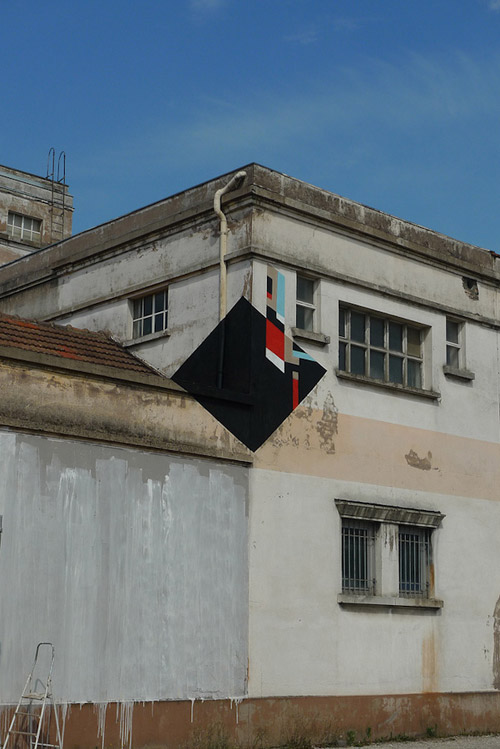
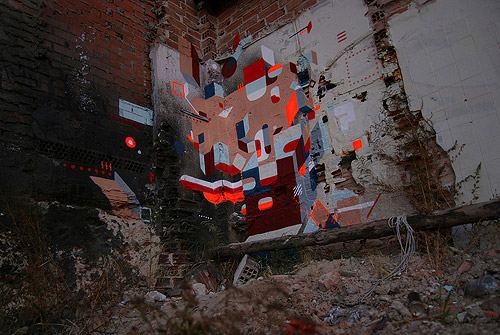
Works by Nelio.